Building a Disciplemaking Movement Through MicroGroups in Pakistan
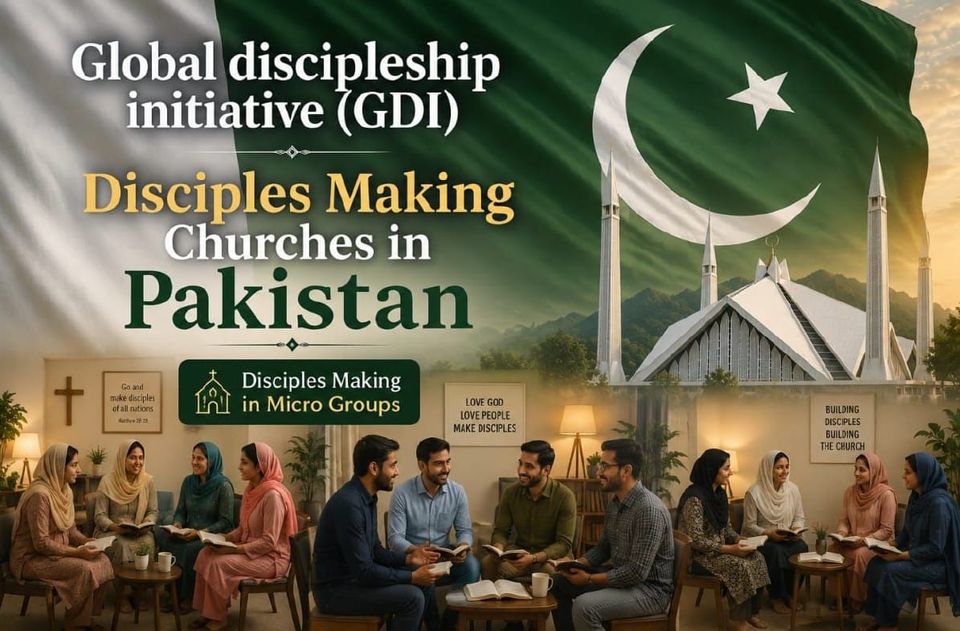
In many parts of the world, churches measure success by attendance, programs, and events. In Pakistan, however, a different vision is taking root—one centered on disciples who make disciples.
The Global Discipleship Initiative (GDI) is partnering with faithful leaders across Pakistan to develop a multiplying movement of disciplemaking through MicroGroups. Rather than focusing on larger gatherings alone, the emphasis is on life-on-life relationships, leadership development, and spiritual multiplication.
Leading from a Healthy and God-Centered Life
Healthy ministry
begins with healthy leaders.
One of the foundational principles being emphasized throughout GDI Pakistan is that leaders must first remain connected to Christ. Spiritual health, personal integrity, and a balanced life provide the wisdom, direction, and strength necessary to lead others effectively.
As leaders grow in their own walk with the Lord, they become better equipped to guide others on the journey of discipleship. Ministry flows from who we are before it flows from what we do.
Building a Strong Leadership Team
The Pakistan team is currently progressing through the Leadership Development Pipeline. The goal is not merely to train leaders but to equip leaders who will reproduce themselves in others.
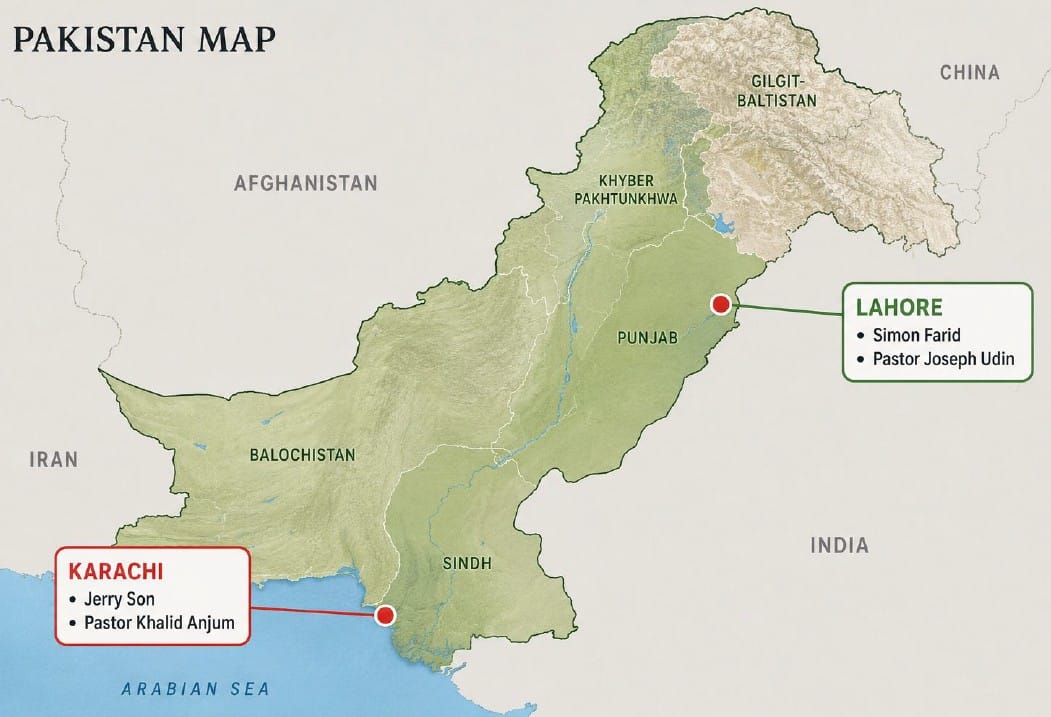
Simon has already raised up three faithful leaders who now oversee training centers, lead MicroGroups, and help expand the disciplemaking movement into neighboring churches:
Additionally, two emerging leaders are currently being coached and prepared for future leadership responsibilities:
Leadership development is guided by the FAITH model:
- F – Faithful
- A – Available
- I – Intentional
- T – Teachable
- H – Hungry
These qualities help identify and develop leaders who can effectively multiply disciples and MicroGroups throughout Pakistan.
Why MicroGroups Matter
Disciplemaking is not viewed as a program but as a multiplying lifestyle.
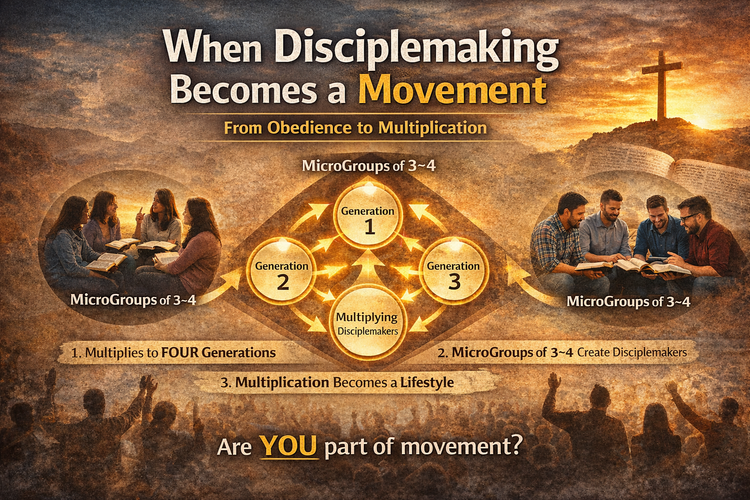
MicroGroups provide an environment where transformation occurs through relationships, prayer, accountability, and Scripture-centered conversations. The focus is not on gathering larger crowds but on helping believers grow into disciplemakers themselves. Three core principles guide the movement:
- Transformation happens in small groups of 3-4 (which is a MicroGroup). Life change occurs most effectively when believers meet regularly in small, relational environments where authentic discipleship can take place.
- Every believer in Jesus Christ becomes a disciplemaker. Rather than relying solely on pastors and church staff, we encourage every believer to participate in making disciples.
- Reproduction is the process. Success is not measured by attendance but by multiplication. Every MicroGroup is encouraged to reproduce and launch additional groups.
Expanding the Vision Beyond Current Centers
As leadership capacity grows, the vision is expanding.
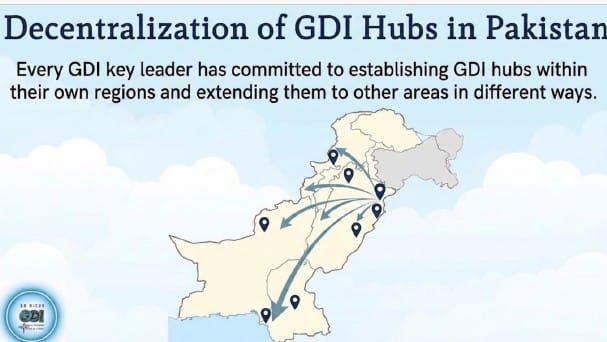
Leadership teams have been established within existing training centers, providing local oversight and sustainability. The next phase includes extending disciple-making hubs into additional cities, beginning with Islamabad.
This expansion reflects a long-term commitment to establishing disciplemaking cultures that can continue multiplying for generations.
The Leadership Development Pipeline
A clear pathway exists for developing leaders within GDI Pakistan.
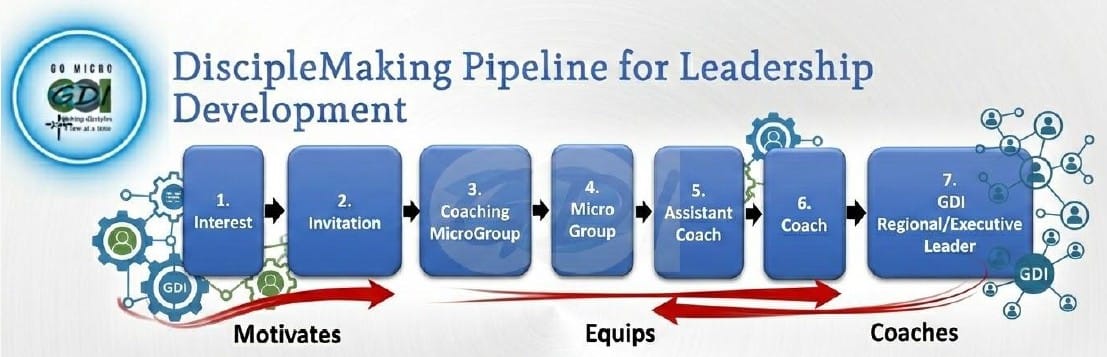
Simon has personally progressed through Step 4 of the leadership development process, which focuses on launching and coaching MicroGroups. The first four stages include:
- Inspire leaders. Present the vision of churches becoming disciplemaking congregations.
- Assess readiness. Evaluate commitment, teachability, and availability while introducing key discipleship resources.
- Train and coach. Conduct coaching sessions and establish MicroGroup training centers.
- Support participants. They multiply by starting their own groups and receive ongoing coaching.
This intentional process helps create leaders who are prepared not only to lead but also to reproduce other leaders.
Pastor Joseph's Ministry Focus in Lahore
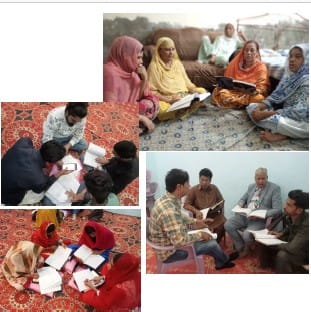
Pastor Joseph serves as a key leader in Lahore and is helping advance GDI's disciple-making vision. His ministry objectives include:
- Prayerfully selecting four churches from an existing network of ten for focused development.
- Conducting disciplemaking workshops.
- Training pastors, leaders, boys, and girls in discipleship.
- Introducing churches to our Global Discipleship Initiative (GDI) vision and mission.
Pastor Joseph currently leads a MicroGroup in the United Arab Emirates as well as several MicroGroups within his home church, demonstrating the multiplying nature of disciplemaking ministry.
Growing Leadership in Karachi
Karachi has emerged as another strategic center for disciplemaking. Pastor Khalid Anjum and Jerry Son serve as key GDI leaders in the city. Together they lead the Covenant Leadership Training Institute, a Bible college that provides an annual four-month training program for pastoral leaders while increasingly integrating disciplemaking principles into its curriculum.
A Story of Multiplication
In 2024, Ralph Rittenhouse went to Pakistan and began discipling four men.
Today, each of those men leads his own disciplemaking quad (MicroGroup), creating a multiplying network of disciples throughout Karachi and beyond. What began as a small investment in four faithful individuals has grown into a decentralized movement with increasing influence. This is a powerful reminder that kingdom impact often starts small.
Jesus invested deeply in a few so that
the many could eventually be reached.
Karachi's Four-Region Strategy
To encourage sustainable growth, Karachi is being organized into four disciplemaking regions:
- North Karachi
- South Karachi
- East Karachi
- West Karachi
Each region is intended to develop local leadership teams capable of reaching their own communities while addressing unique cultural and ministry needs.
This decentralized model empowers local ownership while maintaining a unified disciplemaking vision.
The Shift: From Programs to Disciplemaking
One of the most significant changes occurring within Pakistan is a shift away from program-driven ministry. The focus is becoming increasingly clear:
- Reduce events. Move away from event-centered ministry and prioritize consistent disciple-making relationships.
- Simplify structures. Eliminate unnecessary complexity and empower ordinary believers to lead.
- Prioritize multiplication. Measure success by reproduction rather than attendance.
The goal is not simply to gather people but to equip people who can disciple others.
Challenges
Like every movement, disciplemaking in Pakistan faces obstacles. Several key challenges have been identified:
- Dependence on pastors rather than personal disciplemaking.
- Economic pressures that limit time and energy.
- Leadership insecurity and fear of releasing responsibility.
- A focus on participation instead of multiplication.
- Viewing Christianity as a program rather than a lifestyle.
- A shortage of trained leaders.
- Fear of theological mistakes.
- Overly structured ministry approaches.
- Limited accountability systems for tracking multiplication.
Yet these challenges also reveal opportunities for growth.
As leaders embrace coaching, accountability, and multiplication, these barriers can become pathways for greater kingdom impact.
Looking Toward 2035
Our vision is to see disciplemaking movements established across the world, with multiplying MicroGroups reaching communities, cities, and nations.
What began with four men in Karachi, a handful of training centers, and a few committed leaders is becoming a growing network of disciplemakers who are helping fulfill Christ's Great Commission. The strategy is simple:
Make disciples who make disciples.
And through faithful obedience, God continues to multiply the harvest.
As we celebrate what God is doing in Pakistan, let us continue praying for leaders, churches, and believers who are faithfully investing in others. The future of disciplemaking is not found in larger programs but in transformed lives that reproduce the life of Christ in others.
 Greg Ogden
 Greg Ogden
 Greg Ogden


Member discussion