When Disciplemaking Becomes a Movement
From Obedience to Multiplication
“Movements are fluid, purpose-driven efforts focused on creating action and widespread change, relying on passion and internal leadership.”
In contrast, organizations are structured, stable entities focused on efficiency, sustainability, and formal roles. While movements connect people, organizations manage resources to achieve specific goals.
We need both to move forward as Jesus commanded us to "go and make disciples of all nations."
You’ve heard the call.
You’ve wrestled with the question:
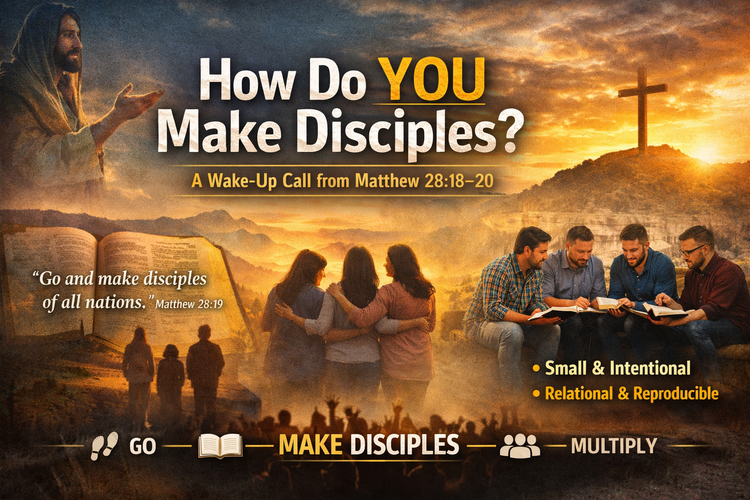
👉 How do YOU make disciples?
But now we must go deeper.
Because disciplemaking is not proven by starting…
It is proven by multiplying.
The Hidden Problem: Addition Looks Like Success
Many people say, “We’re making disciples.”
But what they mean is:
- Teaching a class
- Leading a group
- Sharing truth
- Gathering people
These are good.
But they are not the end goal.
Because if it stops with you…
it hasn’t multiplied.
And what doesn’t multiply…
➡️ Eventually fades
➡️ Becomes dependent
➡️ Cannot sustain itself
You can gather a crowd for a season.
But you cannot build a movement without multiplication.
The Biblical Pattern: Four Generations
Jesus didn’t just make disciples.
He started a chain reaction.
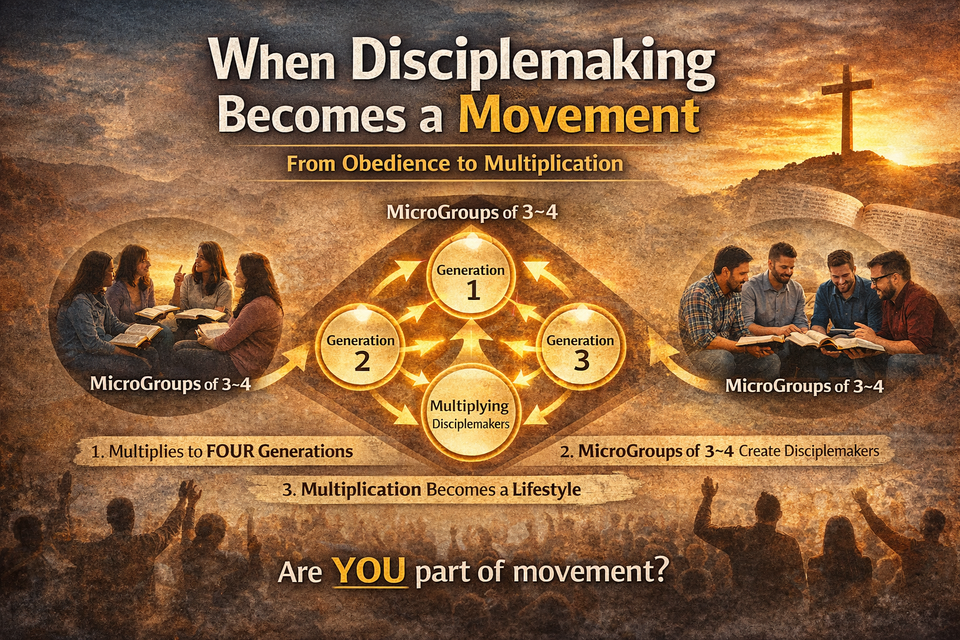
Look at the pattern: Jesus had a MicroGroup.
- Jesus → Peter, James, John
- Disciples → other disciples
- Other disciples → other faithful people
- Other faithful people → others
This is what Paul describes:
“What you have heard from me… entrust to faithful men who will be able to teach others also.” (2 Timothy 2:2)
Do you see it? One-to-one-to-many is referenced in this verse.
👉 Four generations
- Paul
- Timothy
- Faithful people
- Others
This is the test of sustainability.
👉 If disciplemaking reaches the 4th generation, it is multiplying.
👉 If it stops before that....
Why Most Disciplemaking Breaks Down
It often looks like this:
Leader → Group
And it stops.
Why?
Because the structure unintentionally says:
- “You listen.”
- “I teach.”
- “I lead.”
- “You follow.”
That creates:
❌ Dependency
❌ Passivity
❌ Fear of leading
People may grow…
But they don’t reproduce.
The Shift: From Teacher-Centered to Circle-Based
This is where MicroGroups change everything.
Instead of rows…
You form a circle.
And in that circle:
👉 No one is above.
👉 No one is below.
👉 Everyone participates.
Groups of 3–4 people are small enough that:
- Everyone speaks.
- Everyone practices.
- Everyone leads.
There is no hiding.
There is no spectating.
Only participation.
Why 3–4 People Changes Everything
This is not random.
It is intentional.
In a group of 3–4:
- Leadership is shared, not centralized.
- Learning is active, not passive.
- Growth is relational, not informational.
And most importantly:
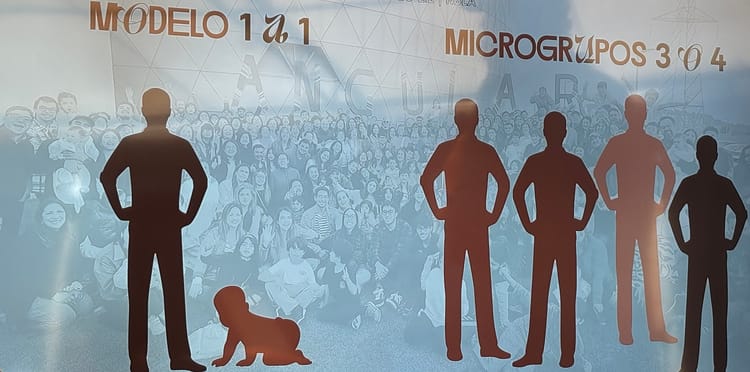
👉 Reproduction feels possible because people think. “I could do this with a few others,” instead of “I could never lead like them.” Similar to an internship, the facilitator models these interactions and invites questions. Discussion and clarity tend to flow more freely.
MicroGroups Multiply by Design
This is the key difference.
Most groups hope to multiply.
MicroGroups are built to multiply.
From the beginning, the expectation is clear:
You are not just a participant.
You are a future disciplemaker.
So the question is always:
👉 Who will you disciple next?
And over time:
➡️ Participants become disciplemakers.
➡️ Disciplemakers start new MicroGroups.
➡️ New MicroGroups multiply again.
This is not pressure.
This is purpose.
From Event to Lifestyle
Disciplemaking was never meant to be a:
❌ program
❌ season
❌ a bullet dot in a list of church objectives
❌ ministry department
It is meant to be a:
✅ lifestyle
✅ rhythm
✅ lifelong calling
We don’t graduate from disciplemaking. We surrender to our calling from Jesus. "Go and make disciples of all nations." - Matthew 28:19.
You live it.
Like breathing.
Like walking.
Like following Jesus daily.
The Tipping Point: When Culture Shifts
At first, multiplication feels intentional.
You have to:
- Think about it
- Plan for it
- Initiate it
But something powerful happens over time.
A tipping point.
Where disciplemaking becomes:
👉 Normal
👉 Expected
👉 Celebrated
It becomes the air the church breathes.
In that kind of culture:
- New believers expect to disciple others.
- Leaders expect to multiply.
- Everyone sees themselves as part of the mission.
And suddenly…
It’s no longer about one group.
It’s about a movement.
The Question You Must Answer
You cannot stay neutral here. Ask yourself:
- Is my disciplemaking reaching the next generation or is it stopping with me?
- Am I part of a circle that multiplies or a structure that is a one-time class?
- Am I preparing others to lead or just teaching them to follow?
- Am I intentionally investing in the lives of others so that "iron sharpens iron" in the relational atmosphere of growth?
REMEMBER
- Disciplemaking is only sustainable when it multiplies to the fourth generation.
- MicroGroups (3–4 people) create shared leadership and reproducible disciples.
- The goal is a culture where multiplication becomes a lifelong lifestyle.
Final Call
Don’t just make disciples.
Make disciplemakers...
...who make disciplemakers...
...who make disciplemakers.
Start small.
Go slow.
Go deep.
Stay faithful.
Expect multiplication.
THINK BIG!
And watch what God breathes into motion in the air your church breathes.


Member discussion