Budgets Are More Than Numbers

Budgets are ministry plans expressed in dollars.
Jesus taught His followers to "count the cost" before beginning a significant work (Luke 14:28). That principle applies to ministry like it applies to building a tower.
A ministry budget is not simply a list of expenses. It reveals what we value, what we intend to accomplish, and what we believe God has called us to steward. The numbers should tell the same story as the ministry plan.
For Global Discipleship Intiative (GDI) leaders, budgeting must begin with GDI DNA, the "molecule that carries the genetic instructions used in the growth, development, functioning, and reproduction of all living organisms."
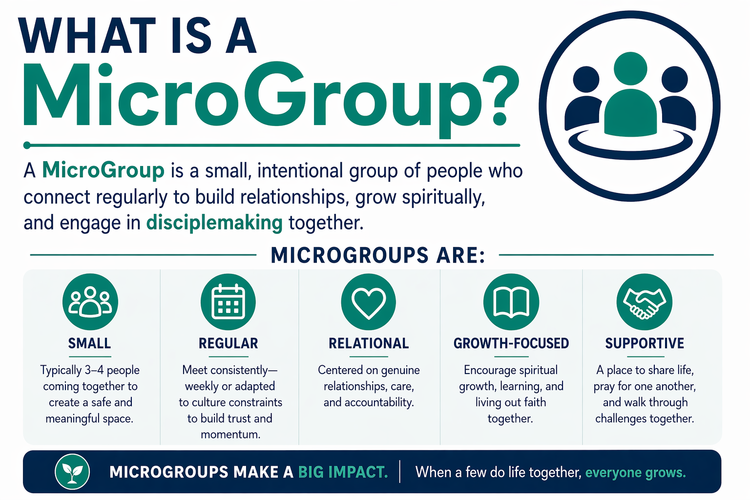
GDI is a movement of people who share a common vision, mission, and set of values. At the heart of the movement are the MicroGroups, that provide the relational environment for growth with Discipleship Essentials, the content. GDI leaders agree not only to understand this DNA, but also to live it, protect it, and pass it forward.
Therefore, the first question in budgeting is not:
“How much money would we like to receive?”
The first question is:
“What has God called us to accomplish, and how does this expense help us carry out that calling?”
The budget is not the pilot of the ministry. GDI DNA sets the direction. The budget supplies the resources needed to follow that direction.
Three GDI Goals to Guide the Budget
Every ministry plan and budget should connect to the three major goals of :
- Decentralization: Building leadership teams in zones, regions, countries, and localities so that ministry does not depend on one person.
- Leadership Development: Moving people through the seven-step process from interest to leadership.
- MicroGroup Multiplication: Developing MicroGroups that reproduce toward the fourth generation.
Goals come before expenses. The ministry plan determines the activities, and the activities determine the budget. An expense that cannot be connected to a GDI goal should be questioned, revised, postponed, or removed.
This protects GDI from becoming busy without becoming fruitful. A ministry may hold many meetings, print many books, or travel to many locations, but activity alone is not the goal. The goal is to develop leaders, multiply disciples, and grow homegrown disciplemaking movements by means of the Spirit (Romans 8:4).
Applying GRITS to Budget Decisions
Our values are remembered through the acronym GRITS: Generational, Relational, Intentional, Transformational, and Spirit-Empowered. These values should shape how money is requested and spent.
- Generational: Fund what will multiply.
A generational budget does more than fund what one leader can accomplish. These funds develop people who will develop others. Ask:- Will this expense help a leader start or multiply a MicroGroup?
- Will it equip an Assistant Coach or Coach?
- Will it strengthen a leadership team rather than one individual?
- Could this investment eventually reach the fourth generation?
The strongest expense is not always the one that creates the largest immediate event. It may be the quieter investment that equips a faithful leader to reproduce.
- Relational: Build the budget together.
GDI disciplemaking is relational. Budgeting should be relational too. The Ministry Partner should not prepare a budget alone and simply send it for approval. The partner and advocate work together. They talk through the goals, calendar, ministry expenses, personal needs, and funding plan.
This conversation is not an investigation. It is a partnership. The advocate asks honest questions, provides counsel, and helps the ministry partner produce a realistic plan.
Trust grows when difficult money questions can be discussed openly and respectfully.
Intentional: Plan before spending.
Intentional ministry requires clear goals, agreed-upon responsibilities, and measurable steps. For example, “Develop more leaders” is a hope. “Move two assistant coaches into the coaching stage by October 15” is a plan. Once the goals are clear, activities can be placed on a yearly calendar. Only then should the cost of each activity be estimated.
Do not write a budget first and later try to explain how it supports the mission.
Begin with the mission and allow the budget to follow. Each ministry partner should begin with SMART goals that are:
- Specific
- Measurable
- Achievable
- Relevant
- Time-bound
- Transformational: Measure more than money spent.
A completed activity is not necessarily a transformed life. A transformational budget asks what changed because the funds were used wisely.- Were leaders developed?
- Were MicroGroups started?
- Did existing MicroGroups multiply?
- Did churches begin adopting disciplemaking as a lifestyle?
- Did people move forward in the leadership development process?
- Is there a story that shows how God changed a person, family, church, or community?
Financial reports matter, but numbers alone do not tell the whole story.
We need to report both measurable progress and stories of transformation.
This is qualitative and quantitaive analysis that promotes integrity.
- Spirit-Empowered: Pray, trust, and act responsibly.
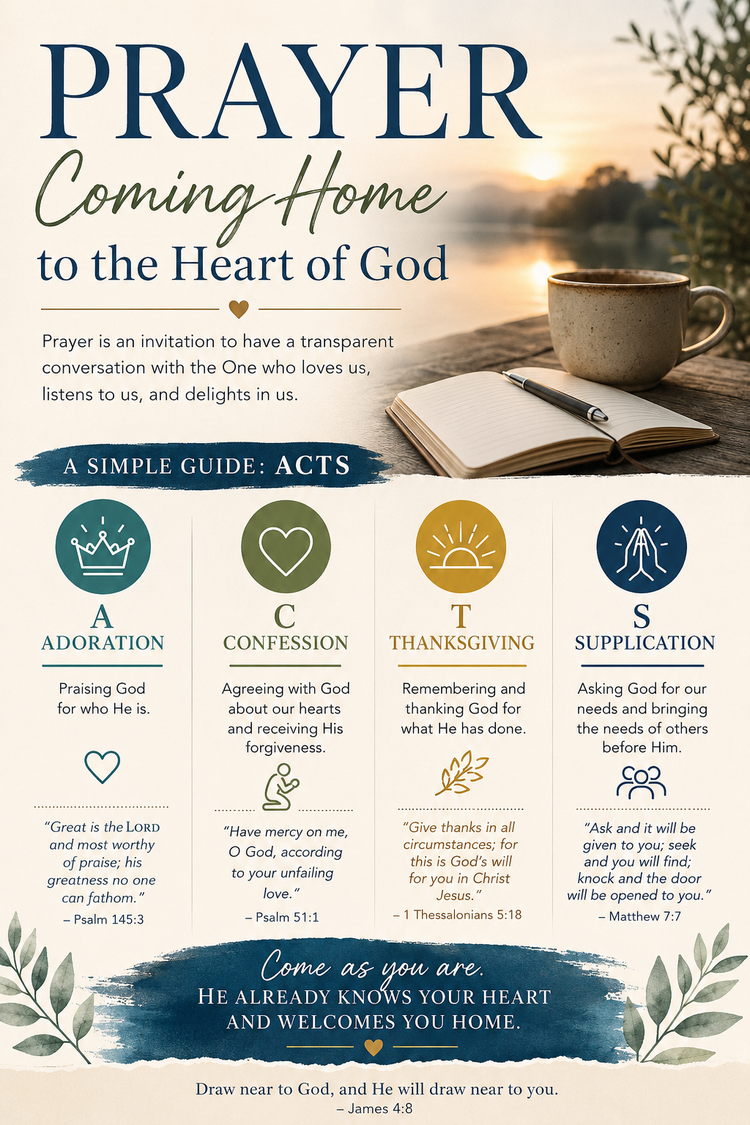
We depend upon the Holy Spirit, not merely human plans or financial resources. Spirit-empowered ministry is not careless ministry. Pray about your goals, expenses, support team, and funding gap. Tell the truth about what has been raised, what has been promised, and what is still needed.
Prayer is not a substitute for planning, and planning is not a substitute for prayer.
Keep Ministry and Personal Expenses Distinct
One of the most important budgeting principles is to distinguish between the Ministry Budget and the Personal Budget.
The Ministry Budget
The Ministry Budget covers the direct cost of carrying out the ministry plan. The GDI worksheet includes categories such as:
- Travel, transportation, fuel, meals, and lodging
- Materials and curriculum
- Printing and copying
- Hosting and meeting venues
- Communication, phone, and internet
- Training
- Other approved ministry expenses
Every ministry expense should appear on the activity calendar and connect to a stated goal.
The Personal Budget
The Personal Budget identifies what the ministry partner and family genuinely need to live in their local area. It helps determine an appropriate stipend.
A stipend is not the same as a salary. This is monthly support intended to help a ministry partner and family live while the partner gives meaningful time to GDI ministry. It is based on actual household need, the time committed to GDI, and other income available to the family.
The budget process includes:
- Total monthly household need
- Percentage or hours of work given to GDI
- Time committed to other employment or ministry
- Every other source of income
- The requested monthly stipend
Listing other income protects the integrity of GDI, helps establish a fair stipend, and demonstrates honesty before donors.
Two Financial Boundaries Must Be Protected
- GDI does not send money that has not been raised. An approved budget establishes the maximum amount that may be spent. It does not guarantee that the full amount will be sent. The Board releases only money that has actually been raised or specifically committed. Approval is permission to spend available funds, not a promise that unraised funds will appear.
- Stipends do not automatically come from the General Fund.
A stipend must be connected to support raised by the Ministry Partner or to funds specifically designated for that ministry role. The general fund cannot automatically be used to fill a stipend gap. These boundaries may sometimes feel restrictive, especially when ministry needs are urgent. Yet boundaries protect this MicroGroup movement. They honor donors, protect leaders from unhealthy expectations, and help GDI remain financially sustainable.
Support Specific Country Partners
Are you praying to reach a particular country? Check the list here to see where GDI is growing disciplemakers. This donation site may be slow to load. Underneath the blue and green boxes on this Donate page will be an area for ACH or credit card gifts. Directions are below.
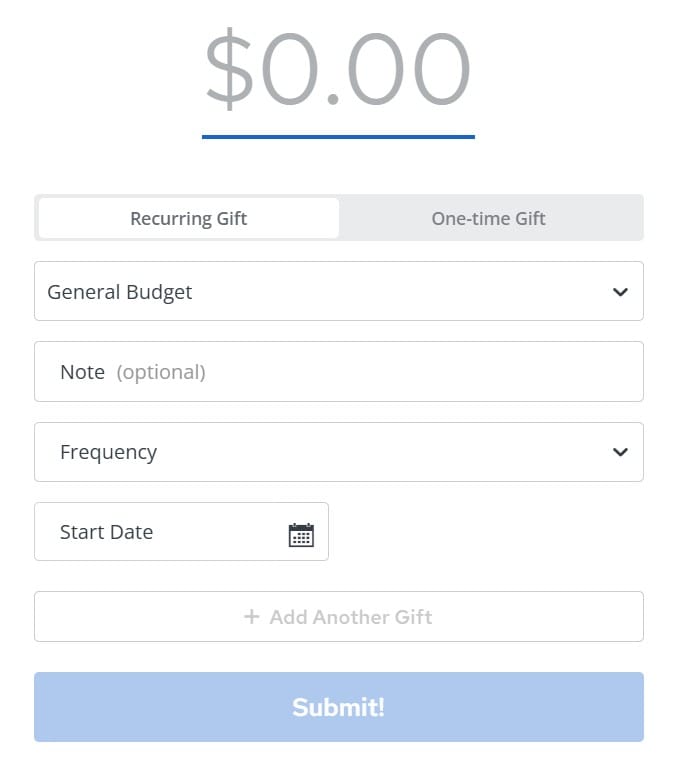
- Click the down-arrow on the right side of General Budget.
- Scroll down to select a particular person/country first.
- Type in the amount you want to give as a tax-deductible gift.
- Write an optional note.
- Select the down-arrow on the right side of Frequency.
- Choose the Start Date.
- Click Submit to send your gift.


Member discussion