Nominal Christians
By the age of twelve, I was an emotionally troubled child. I heard some really good news. God loved me and wanted a relationship with me.

I suppose our deepest convictions come out of our turning point experiences and this was certainly true for me. Let me lead you through the low points and high points of my disciplemaking discoveries that led to an intentional, relational approach that focuses on MicroGroups as the vehicle for making transformed disciples who multiply disciples.
Coming to Faith in Christ
I was raised in what is often called a nominal Christian home. Nominal means “in name only.” My family attended church on Sundays, but I do not believe my parents were able to introduce me to what we evangelicals call “a personal relationship” with Jesus.
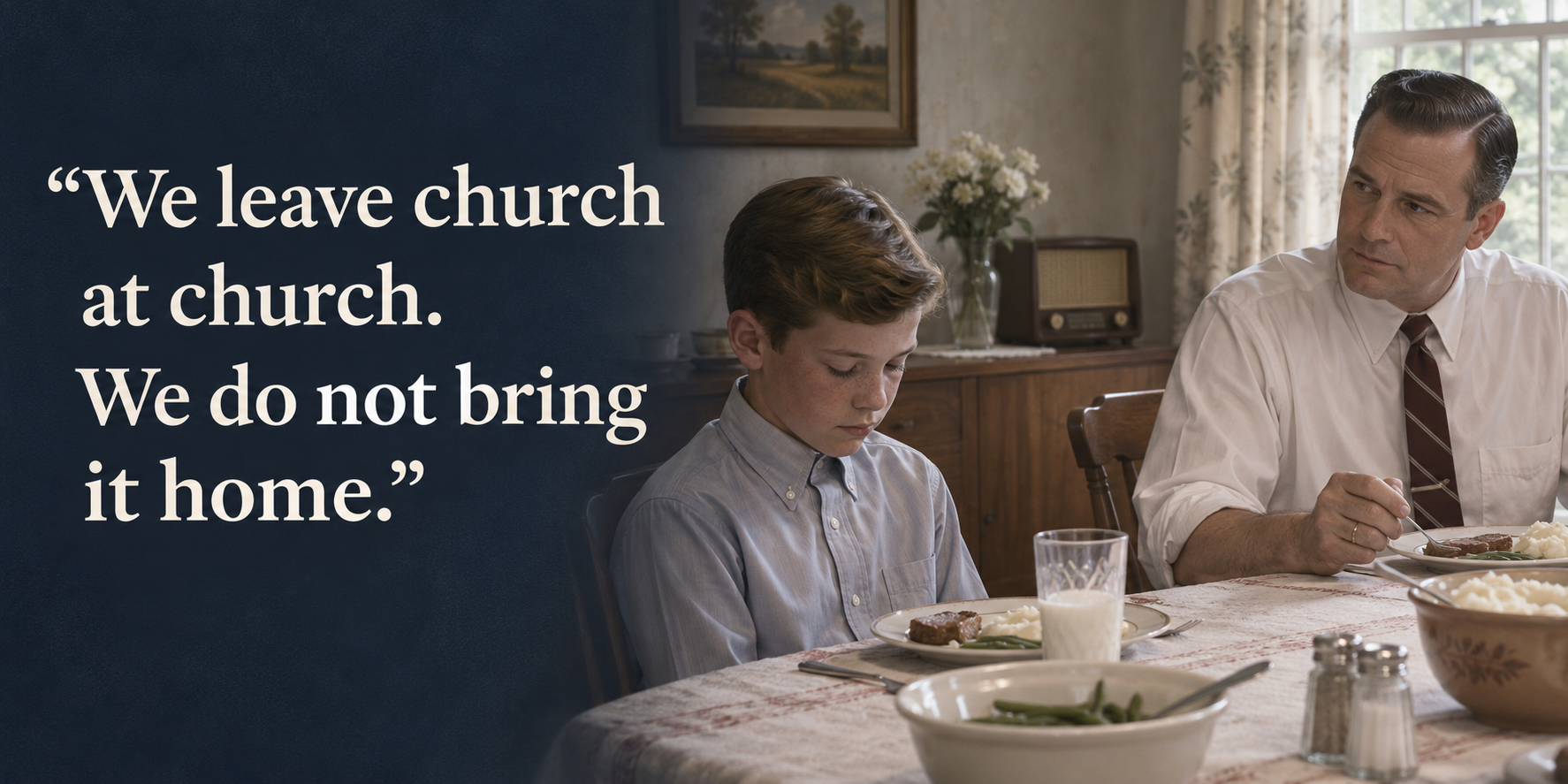
I was born just after World War II, when the typical American family had some form of religious practice. My parents relied on the church to provide the spiritual input into our lives (brother, sister, and myself). Fairly early on as a child, I sensed the message that home and church were to be kept separate from each other. One Sunday after church we were sitting around the family table eating our noon meal. Apparently, something of interest was said in my fifth-grade Sunday School class. I mentioned the topic. My father’s reply is seared into my mind to this day. He said something to the effect, “We leave church at church. We do not bring it home.”
By the age of twelve, I was an emotionally troubled child. Because I was one of the youngest students in my grade, my emotional immaturity became increasingly evident. I struggled with the transition from the familiarity of a single elementary classroom to the overwhelming pace of middle school, where I navigated multiple teachers, classrooms, and expectations each day.
Fear and anxiety consumed me. School became a daily emotional battle. The academic demands, the challenge of building friendships, and the pressures of athletics all felt overwhelming. Each day seemed more like something to survive than an opportunity to learn and grow.
It was in the middle of this school year that I was invited to go off to a winter church camp. That weekend would forever set me on a new course. On Saturday morning, I heard some really good news. God loved me and wanted a relationship with me. I recall that the speaker concluded his message by quoting Jesus’ words in Matthew 11:28.
“Come to me, all who labor and are heavy laden, and I will give you rest.”
That word “rest” just reverberated in my spirit. When the invitation came to receive Christ into my life, I could not be chained to my seat. A counselor led me through a series of questions like, “Do you believe Jesus died for your sins? Do you want to ask for forgiveness? Do you want Jesus to come into your life?” To each I was saying, “Yes! Yes! Yes!”
It felt like God’s love was welling up within me and washing over me at the same time. I was experiencing the words of the hymn, “O, the Deep, Deep Love of Jesus.”
“O, the deep love of Jesus, vast, unmeasured, boundless free, rolling as a mighty ocean in its fullness over me; underneath, all around me is the current of Thy love.”
That evening in my cabin, my counselor asked if anything had happened to any of us today? To that point I had not learned the right evangelical language, but I somehow made it known that I had responded to the invitation to receive Christ in my life. My cabin counselor asked me to fill out a “decision card” indicating that I had made a commitment to Christ.
What happened next
The only instruction I recall from that weekend was the exhortation, “If you have become a Christian this weekend, you should read your Bible.” That was not helpful. I had never read my Bible on my own. I actually had to find one even though I had attended church with my family regularly. I had no idea what was in a Bible, of course, nor where to start. I tried reading for a couple of days but could not make much sense of it.
Of course, it was only years later in retrospect, that I realized that the church had totally failed to provide any follow up. All I got was SILENCE. I have no idea in whose file that decision card ended up. I can only assume that all that the church leaders were interested in was reporting the numbers of students who had become Christians that weekend. Job done.
So, I just drifted over the next 5 years maintaining occasional church attendance but without a clue as to how to grow in this new, wonderful relationship.
My simplified book of Transforming Discipleship called Go Micro will take you through the fundamentals of growing the culture of a disciplemaking church or ministry. It is free to all living outside the USA or Canada. Email gomicro@globaldi.org.
Go Micro Book Sections
- The Great Commission: Jesus’ Marching Orders
- The Need for Intentional, Relational Disciplemaking
- Jesus’ Model and the Process He Used to Make Disciples
- Why Have We Not Practiced Jesus’ Model, If the Scripture Is So Clear?
- The MicroGroup: The Means for Transforming and Multiplying Disciples
And at the end of the book is a survey for you and your church. Are you a nominal Christian, in name only, or a true follower of the Lord Jesus Christ?
 Greg Ogden